Posted on 26/09/2026
Finsbury Square Wedding Flowers Guide for Nearby Venues
If you are planning a wedding near Finsbury Square, flowers can do a lot of heavy lifting. They soften modern city spaces, warm up historic rooms, and tie a venue together without shouting for attention. This Finsbury Square wedding flowers guide for nearby venues is here to help you make confident choices, whether your celebration is intimate and candlelit or full of colour and movement. Around here, the details matter: a bouquet that survives the cab ride, table flowers that do not block conversation, and arrangements that still look fresh after the room fills with music, chatter, and a few happy tears.
Truth be told, wedding flowers near Finsbury Square are rarely just about the flowers. They are about timing, access, venue rules, transport, seasonality, and how the room actually feels once people arrive. In a busy central London setting, all of that adds up fast. This guide breaks it down in plain English, with practical advice for nearby venues, useful comparisons, and a checklist you can actually use.
Why Finsbury Square wedding flowers guide for nearby venues Matters
Finsbury Square sits in a part of London where wedding logistics and aesthetics meet in a very real way. Nearby venues often combine period architecture, office conversions, hotel ballrooms, private dining rooms, and contemporary event spaces. That mix is lovely, but it also means the same floral design will not work everywhere. What looks polished in one room can feel too small, too large, or just a bit lost in another.
A local wedding flowers plan matters because flowers do three jobs at once. They set tone, support photography, and solve practical visual problems. A blank wall behind a ceremony table? Flowers help. A long reception table that needs height without blocking faces? Flowers help there too. A venue with strong daylight and a lot of glass? You may need bolder colour, stronger shape, or tighter styling so the arrangements do not disappear in the light.
Near Finsbury Square, you also have to think about movement. Guests may be arriving by tube, taxi, or on foot from office streets and side roads. Deliveries are often time-sensitive. Setup windows can be short. Staff may need arrangements that are easy to place and easy to clear away. If you have ever watched florists carrying buckets into a venue at 7am while a coffee queue is already forming outside, you will know what I mean. It is a small city ballet.
Key point: the best wedding flower plans for nearby venues are not just beautiful; they are venue-specific, route-aware, and realistic about timings.
How Finsbury Square wedding flowers guide for nearby venues Works
The process usually starts with the venue, not the flowers. That sounds obvious, but it is where a lot of couples get tripped up. Before choosing peonies, roses, orchids, or a more textural seasonal mix, work out what the room actually needs. Is the ceremony in a bright, minimalist space? Are the reception tables round or rectangular? Is there one key focal point or several smaller areas to style?
From there, you narrow the floral language. For example, a venue with dark wood and warm lighting often suits richer tones and fuller arrangements. A clean, contemporary room near Finsbury Square may call for whites, soft blush, green foliage, and elegant shapes. If the venue is small, the safest route is usually fewer larger statement pieces rather than lots of tiny arrangements fighting for attention. Nobody wants floral clutter. Lovely flowers, yes. Clutter, no.
You then match the flowers to the practical setup. That means considering delivery access, installation time, deconstruction after the event, and whether pieces can be reused from ceremony to reception. A good florist will usually ask about stair access, loading points, venue restrictions, and whether the couple wants designs that photograph well from one angle or many.
If you are still browsing broader options, the wedding flowers in Finsbury EC1 page is a useful starting point for seeing how local wedding styling can be approached as a service rather than as a one-size-fits-all arrangement.
In practice, the workflow looks like this:
- Review the venue layout and shortlist the spaces that need flowers.
- Choose a palette that fits the venue, the season, and the dress code.
- Decide which arrangements are essential and which are optional.
- Confirm delivery, setup, and collection timings.
- Check how the flowers will move from ceremony to reception, if they will move at all.
Key Benefits and Practical Advantages
There is a reason people spend time getting the floral plan right. Done well, wedding flowers add calm as much as beauty. They make a room feel finished. They can hide visual awkwardness. They can also make a modest budget feel more considered, which is useful in central London where venue hire alone can eat through funds faster than expected.
- Better venue fit: flowers can be scaled to match the room, rather than forcing a generic wedding look into an unsuitable space.
- Stronger photography: coordinated colour and shape help the images feel polished, especially in mixed light or against neutral venue backdrops.
- Smarter use of budget: when you know what matters most, you can put money into the high-impact areas and keep the rest restrained.
- Less stress on the day: clear delivery and setup planning reduces last-minute confusion. And honestly, weddings already have enough of that.
- More cohesive guest experience: flowers can guide the eye from ceremony to dining to cake table without feeling overdone.
There is also a practical advantage that is easy to overlook: flexibility. Some floral designs are built to move with the day. For example, bridesmaids' bouquets can double as display accents during photos, and table arrangements can be reused in a lounge area after dinner. That kind of reworking is especially helpful if the venue hire period is tight.
If you like to browse by style and mood, the curated collections in the weddings collection can help you narrow down the tone you want before you commit to individual items.
Who This Is For and When It Makes Sense
This guide is for couples planning a wedding near Finsbury Square, but it also helps anyone coordinating florals for a nearby venue, a planner managing multiple suppliers, or a family member trying to make sensible choices without getting buried in Pinterest boards. Let's face it, weddings can turn even practical people into colour swatch obsessives.
It makes the most sense if one or more of these sounds familiar:
- You have a venue near Finsbury Square and need flowers that suit a city setting.
- You want elegant designs but do not want them to feel too formal or too fussy.
- You are working with a short setup window or a tight access plan.
- You want to reuse florals across the day to stretch value.
- You need a clear plan before speaking to a florist, venue coordinator, or planner.
This is also for couples who know the venue matters more than the theme. A romantic garden-style bouquet can look wonderful, but not every nearby room is asking for the same thing. A sleek hotel space near Finsbury Square will usually reward controlled, structured florals; a heritage interior may welcome a softer, looser look.
For couples still exploring specific bridal pieces, the wedding bridal bouquets section can help you think through bouquet shape, size, and style before the bigger floral picture is finalised.
Step-by-Step Guidance
If you want a sensible route through the planning, start here. Not glamorous perhaps, but it works.
1. Study the venue first
Walk the space if you can, or ask for photos of the exact room setup you will use. Look at ceiling height, table shape, natural light, and what is already in the room. A venue with patterned wallpaper, strong artwork, or dramatic lighting often needs more restrained florals than you might expect.
2. Choose the floral job you want each arrangement to do
Not every arrangement needs to be a centrepiece. Some pieces are there to welcome guests, some to frame a ceremony, and some simply to make photos feel complete. Once you know the role, the design gets much clearer.
3. Build the palette around the room, not just the dress
Yes, the dress matters. Of course it does. But if the room is warm-toned and the palette is icy white with silver accents, the result may feel disconnected. Try to choose flowers that work with the venue lighting and furniture as well as the attire.
4. Confirm timing and transport
Central London timing can be tricky. Deliveries may need to arrive early, and if your venue only allows access at a specific hour, that should shape your floral plan. Large delicate arrangements are not ideal if they have to sit in a van for too long. A florist should plan around that.
5. Decide what travels and what stays put
Some flowers can be moved from ceremony to reception with minimal effort. Others are better left in place. If you are using one ceremony arch and one dinner backdrop, make sure the team knows exactly what is being reused and who is moving it.
6. Leave space for practicality
This is where experience helps. Tall arrangements can look stunning, but if guests cannot make eye contact across a table, the design is working against the event. Keep sightlines in mind. Keep candles and trailing petals away from anything that could become a nuisance. Pretty should still be useful.
Expert Tips for Better Results
In our experience, the best wedding flowers near Finsbury Square tend to follow a few quiet rules. Nothing flashy. Just good judgement.
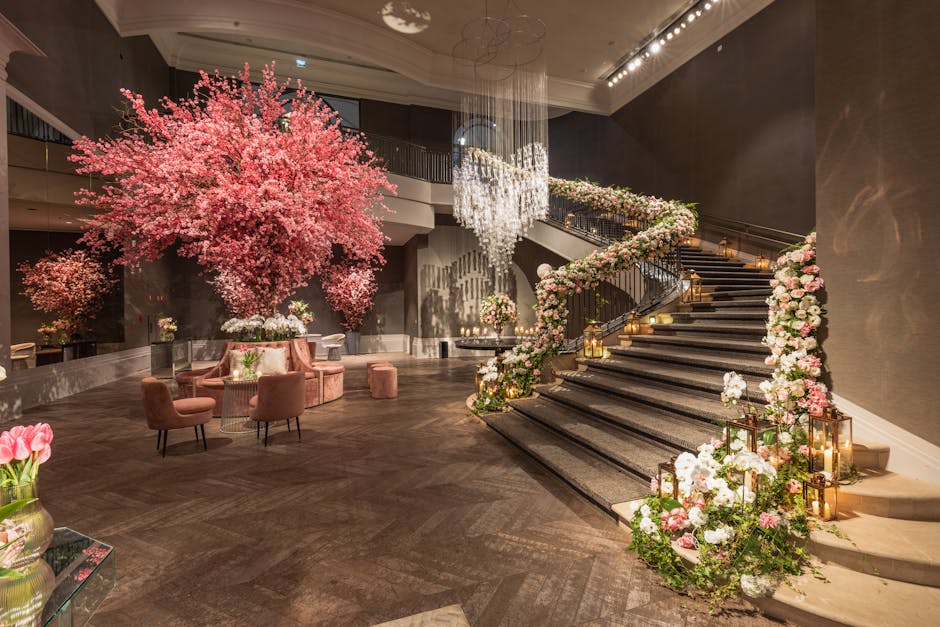
- Use the venue's strongest feature: if the room has a beautiful mantel, staircase, or window line, let flowers support that feature instead of competing with it.
- Repeat, do not overload: repeating a small set of blooms or colours across bouquets, ceremony pieces, and tables creates unity without turning the room into a flower shop showroom.
- Mix textures, not just colours: roses, lisianthus, hydrangeas, foliage, and orchids can create more depth than a simple block of one flower type.
- Think about the end of the day: flowers should still look good after vows, photos, dinner, and a roomful of guests. That is the real test.
- Keep one focal point strong: if you have a ceremony backdrop, make it the visual hero and let the other pieces support it quietly.
A small human moment here: one of the easiest ways to improve the whole design is to stop adding things. There, I said it. Often the flower plan gets better the moment someone removes the unnecessary bit that looked good on paper but felt cramped in the room.
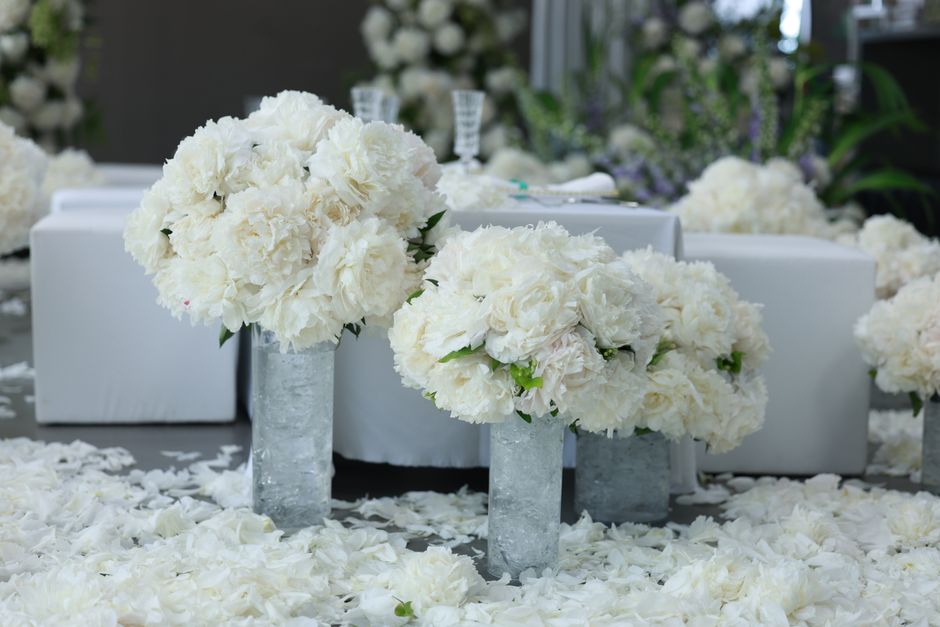
For couples drawn to soft, classic palettes, white and ivory pieces tend to suit central London venues beautifully. If that is the direction you want, the white flowers collection and the White Wonders bridal bouquet offer a clean visual starting point that can be adapted to many nearby venues.
If your style leans richer or more romantic, deeper tones can create lovely contrast in bright spaces. That contrast is often what makes wedding photos feel alive rather than flat.
Common Mistakes to Avoid
There are a few traps that show up again and again. Avoiding them will save money, time, and a bit of stress.
- Choosing flowers before confirming the venue: the room should shape the floral plan, not the other way around.
- Ignoring access and timing: if the venue has limited loading access or strict setup windows, the design needs to reflect that.
- Going too small with the key pieces: in a larger room, tiny arrangements can disappear. They may be pretty, but they will not carry the space.
- Over-decorating every surface: not every table needs a large arrangement. Some areas need breathing room.
- Forgetting who moves the flowers after the ceremony: if the florist is not doing it, someone else has to. And someone always has to.
- Not checking the venue's restrictions: some spaces are fussy about candles, confetti, hanging installations, or where deliverables can be placed.
The biggest mistake, though, is treating all nearby venues like they need the same thing. They do not. A polished room in Finsbury Square can look completely different from the next one down the road. Good floral planning respects that.
Tools, Resources and Recommendations
You do not need a huge toolkit, but a few practical resources make planning easier. A decent mood board, venue floor plan, and colour references can go a long way. If you are not a visual planner, no problem. Even a handful of screenshots and a few honest notes will help a florist understand what you want.
Useful things to gather before speaking to a florist:
- Venue name and exact room dimensions, if available
- Photos of the ceremony and reception spaces in daylight and evening lighting
- Any venue rules on candles, hanging florals, or installation times
- Dress, suit, or stationery colours if already chosen
- Guest count and table layout
- Ideas for bouquet styles, flower types, and overall mood
It also helps to browse related local pages so you can see how flowers are grouped by service or style. For example, the florist in Finsbury EC1 page is useful if you want a broader sense of local flower support, while the flower care guide can help you keep bouquets and table flowers looking fresh once they arrive.
If you are trying to stay within budget, the cheap flowers in Finsbury EC1 page may help you think about value-driven choices, though for weddings it is usually better to focus on what will be seen most. Budget smartly, not just cheaply. There is a difference.
You can also use the broader best flower delivery in Finsbury EC1 page to understand the wider local delivery approach, especially if you are comparing florists and need confidence around service levels.
Law, Compliance, Standards, or Best Practice
Wedding flowers themselves are not heavily regulated in the way some event services are, but best practice still matters. In central London, the biggest practical issues tend to be access, permissions, safety, and clear communication with the venue. If a florist is placing large arrangements, using candles, or installing pieces at height, the venue may have its own rules. Those rules should be checked early, not on the morning of the wedding when everyone is already busy.
From a service perspective, a trustworthy florist should be clear about delivery terms, refunds or substitutions where relevant, and how fragile items are handled. If you are ordering bespoke wedding flowers, ask what happens if a specific bloom is unavailable. Seasonal substitutions are normal in floristry, but they should be handled thoughtfully and communicated clearly.
Best practice also includes accessibility. Florals should not block walkways, exits, or key sightlines. Table arrangements should allow guests to talk to one another. Setup should not create trip hazards, and any stand, frame, or installation should be stable. That sounds plain, but it matters a lot on a hectic wedding day.
Finally, think about sustainability where practical. Reusable vessels, reduced wrapping, and designs built around seasonal stems can all make the plan feel more considered. If this matters to you, the sustainability page is worth a look.
Options, Methods, or Comparison Table
One of the easiest ways to choose wedding flowers is by deciding how you want to use them. Below is a simple comparison of three common approaches for nearby venues.
| Approach | Best for | Strengths | Watch-outs |
|---|---|---|---|
| Statement pieces | Ceremony backdrops, entrance areas, feature tables | Strong visual impact, good for photos, can define a room quickly | Can feel overpowering if repeated too often; may need careful transport |
| Distributed smaller arrangements | Intimate receptions, long banqueting tables, mixed-use rooms | Flexible, easier to move, often suits compact venues | May not create enough visual weight in larger spaces |
| Hybrid design | Most central London weddings | Balances drama and practicality; lets you reuse pieces through the day | Needs coordination so it does not look patchy or underplanned |
For nearby venues around Finsbury Square, the hybrid approach often wins. It gives you one or two strong focal points while keeping the rest of the room coherent and manageable. You get the atmosphere without having to fill every spare inch, which is, frankly, a relief.
If you are comparing specific floral categories, the wedding table arrangements, wedding buttonholes, and wedding bridesmaid bouquets pages show how the smaller pieces can work together as part of the wider design.
Case Study or Real-World Example
Here is a realistic example from a typical Finsbury Square area wedding plan. A couple books a nearby venue with a ceremony in one room and dinner in another. The ceremony space has clean walls, strong daylight, and a fairly modern feel. The dining room is warmer, with lower lighting and long tables. Their first instinct is to use the same floral design everywhere. That is a common thought, and not a bad one. But it would not have been the best fit.
Instead, the plan is split. The ceremony gets a fuller focal arrangement with soft white blooms, pale blush, and textured foliage to create a calm backdrop. The bouquets echo that palette but stay slightly looser so they feel personal rather than formal. At dinner, the table arrangements are lower, using the same flower family but with a more compact profile so guests can talk across the table without bobbing around stems. The buttonholes are simple and tidy, because in a city setting they need to look smart from entrance to speeches.
The result is consistent without being repetitive. Guests recognise the same design language throughout the day, but each room feels tailored. That is usually the sweet spot. Not too busy, not too sparse. Just right, if that phrase is allowed without sounding like a biscuit advert.
For couples who like elegant, classic whites, a combination like White Roses Wedding Arrangement and White Lily Rose Orchid Wedding Centrepiece can create that balanced look nicely in a nearby venue with mixed lighting.
Practical Checklist
Use this checklist before confirming your wedding flower plan. A quick run-through now can prevent a lot of awkwardness later.
- Have I checked the exact venue room, not just the venue name?
- Do I know where the flowers are being delivered and who signs for them?
- Have I confirmed access times, loading instructions, and any lift or stair restrictions?
- Does my floral palette suit the room lighting and decor?
- Have I chosen which flowers are essential and which are optional?
- Will any arrangements be reused from ceremony to reception?
- Have I checked table sizes and sightlines for guests?
- Do I know the florist's policy on substitutions if a stem is unavailable?
- Have I matched the bouquet style to the dress style and scale?
- Is there a clear plan for collection, disposal, or take-home flowers after the event?
Quick expert summary: the best flowers for nearby Finsbury Square venues are the ones that fit the room, respect the timing, and make the whole day feel easy. That is the real win. Beautiful, yes. But also calm, practical, and well thought through.
Get a free quote today and see how much you can save.
Conclusion
Planning wedding flowers near Finsbury Square is really about matching design with place. Once you understand the venue, the light, the access, and the shape of the day, the floral decisions become much easier. You are no longer choosing flowers in the abstract. You are choosing flowers that belong in that room, on that day, with those guests.
The good news is that you do not need a massive budget or an elaborate concept to make the flowers work hard for you. You need a clear plan, a sensible palette, and a florist who understands central London realities. Keep the focus on fit, flow, and timing, and the result will feel elegant without trying too hard. That is usually the sweet spot, really.
If you take only one thing from this guide, let it be this: start with the venue and build the flowers around it. Do that, and the rest tends to fall into place.
Frequently Asked Questions
What should I consider first when planning wedding flowers near Finsbury Square?
Start with the venue layout, lighting, and access. Those three things affect the size, shape, and practicality of every floral choice, often more than the colour scheme does.
How far in advance should I book wedding flowers for a nearby venue?
Earlier is usually better, especially for popular dates and custom designs. If you have a specific florist or a detailed floral vision, booking well ahead gives everyone more room to plan properly.
Which flowers work best for central London wedding venues?
There is no single best flower, but roses, lisianthus, orchids, hydrangeas, and textured foliage often work well because they can be styled formally or softly depending on the room.
Can I reuse ceremony flowers at the reception?
Yes, often you can. It depends on the design and venue timings. Reuse is one of the smartest ways to stretch value, as long as the move is planned in advance.
How do I make sure my flowers suit a modern venue?
Use cleaner shapes, controlled palettes, and fewer but stronger arrangements. Modern venues usually benefit from elegant restraint rather than lots of scattered detail.
What if my venue has limited access or a tight setup window?
Choose flowers and mechanics that are quick to install and easy to move. Your florist should know whether the plan needs to be simplified so it can be set up without stress.
Are white wedding flowers still a good choice?
Absolutely. White designs are timeless and work well in many nearby venues, especially when you want the room to feel bright, calm, and elegant without competing with the architecture.
How can I keep wedding flowers within budget?
Focus on the highest-impact areas first, such as the ceremony backdrop, bridal bouquet, and main tables. You can often keep the rest simpler without losing the overall look.
Do I need different flowers for buttonholes and bouquets?
Not necessarily, but they should feel coordinated. Small items like buttonholes can echo the bouquet palette without copying it exactly, which usually looks more natural.
What should I ask a florist before confirming the order?
Ask about timing, delivery, substitutions, setup, collection, and what happens if the venue changes a detail at short notice. Clear answers up front save a lot of headaches later.
How do I choose between bold colours and soft neutrals?
Think about the room first. Bright, clean spaces can handle stronger colour well, while darker or more decorative rooms often look best with softer, more refined tones.
Can flowers make a small venue feel better, not busier?
Yes. In smaller spaces, the right flowers can create definition and warmth without crowding the room. The trick is to use scale carefully and avoid overfilling every surface.